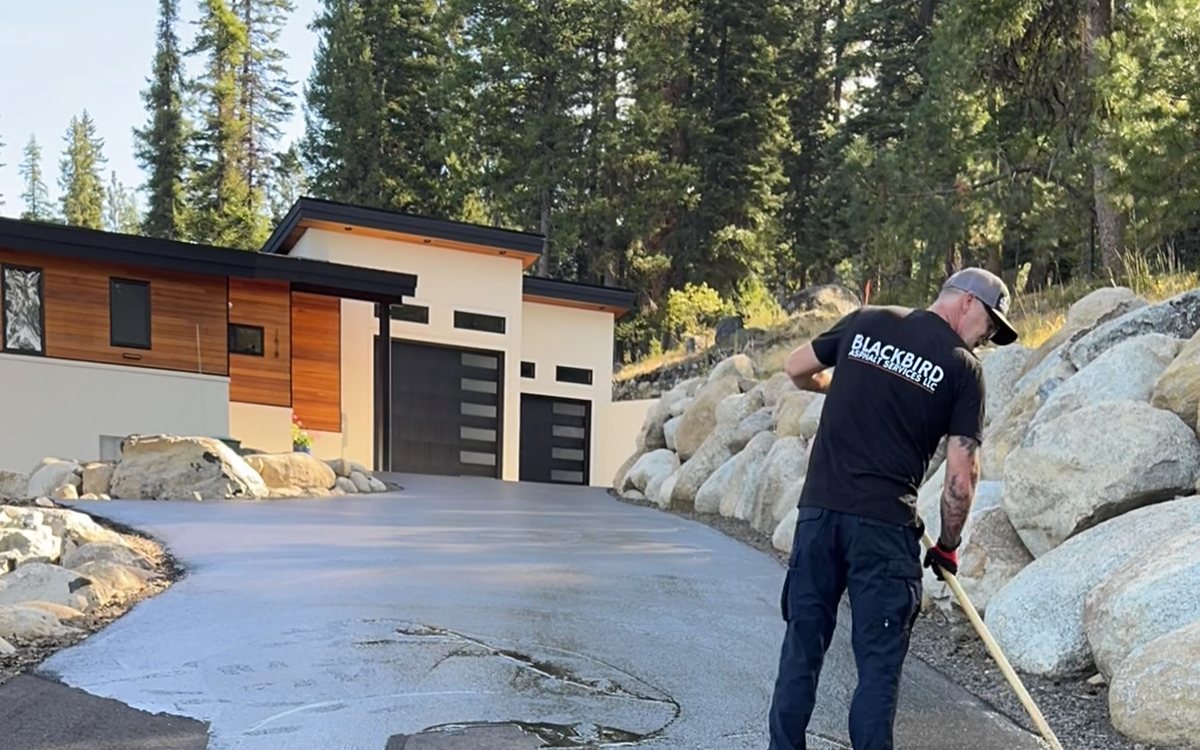
Sealcoating
A commercial-grade coat that blocks UV, water, oil and salt — the four things that turn flexible asphalt into brittle asphalt. Squeegee or spray applied, edges cut clean by hand.
Sealcoating details →
Sealcoating, crack filling and asphalt repair for commercial lots and residential driveways. Measured on site, quoted in writing, done on schedule.
Get a Free Quote
Tell us about the property and we'll get back to you with a number.
What We Do
Everything that keeps asphalt out of the replacement cycle. Repair first, seal second, stripe last — in that order, every time.
A commercial-grade coat that blocks UV, water, oil and salt — the four things that turn flexible asphalt into brittle asphalt. Squeegee or spray applied, edges cut clean by hand.
Sealcoating details →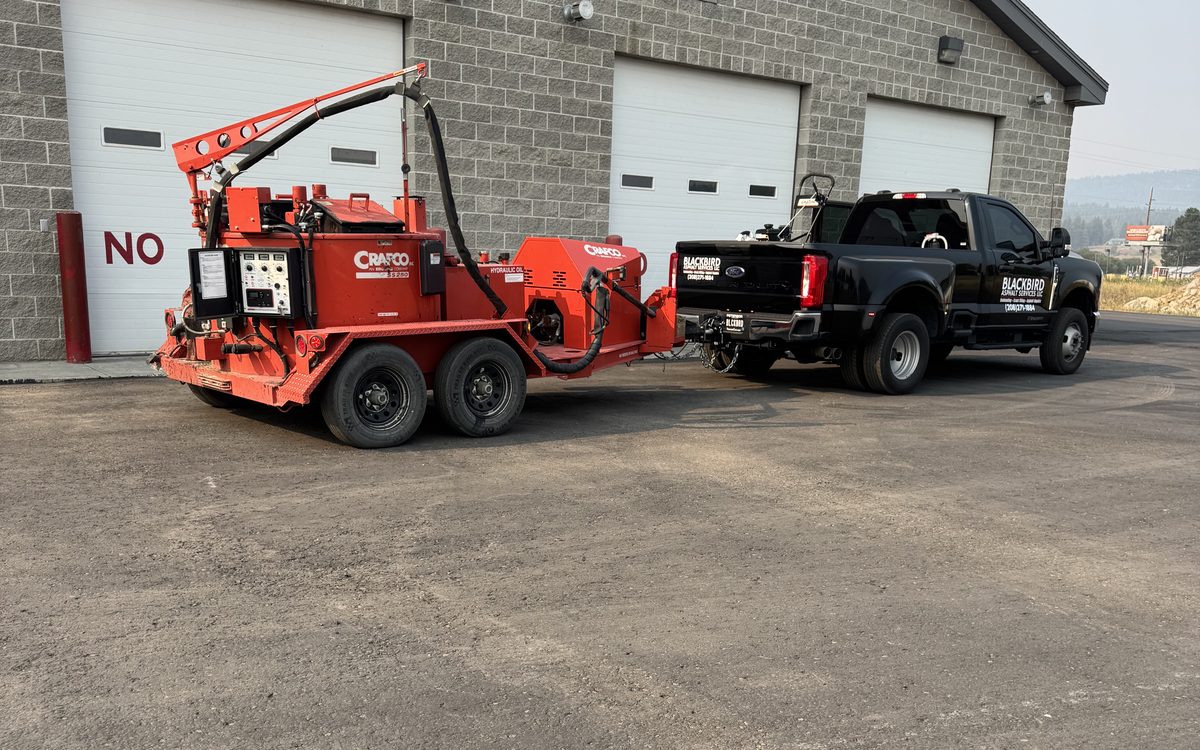
Cracks routed and cleaned, then filled with hot-pour rubberized sealant. Potholes saw-cut square, tacked and compacted so the patch doesn't pop out next winter.
Repair details →Retail centers, offices, HOAs, churches, schools, warehouses and municipal lots. Night and weekend scheduling, phased sections, certificates of insurance, and documentation your property manager can file.
Commercial services →Your driveway is the first thing anyone sees. Clean edges, no overspray on the garage or the grass, and a crew that puts your cars back where they found them.
Residential services →
See It Done
Sealer cut clean at the edges and worked evenly across the surface, with the driveway prepped before a drop of material moved.
Every photo on this site is a Blackbird job. No stock photography, no other company's work, no borrowed before-and-afters.
Why Blackbird
Thin material, dirty surface, and skipping the repairs. We built our process around not doing any of those things.
Blow, sweep, wire-wheel the edges, scrub oil spots with a primer that sealer will actually bond to. Surface prep is most of the labor and all of the durability.
Sealer mixed to manufacturer spec. Watering it down stretches a drum across more square feet — and takes years off the job. You'd never know until it fails.
Every crack over a quarter inch gets sealed first. Coating over an open crack just hides the hole water is already running through.
Weather moves paving schedules — that's real. What isn't acceptable is silence. If the date changes, you hear it from us first, with a new date.
How It Works
Call or send the form. We ask for the address, rough size, and what's bothering you about the surface.
We walk the lot, measure square footage, count cracks and note drainage. No sight-unseen numbers.
Line-item scope: prep, repairs, material, coats. A fixed number and a date range.
Barricades up, sections staged, site cleaned, and a walkthrough before we invoice.
Reviews
Pulled live from our Google Business Profile — we don't write these.
Service Area
We cover all of Valley County and Adams County, and work into Idaho County as well. For larger commercial projects outside that area, call us — we will always look at what can be done.
Questions
It comes down to square footage, surface condition, how much crack filling is needed, and site access. Residential driveways land in a fairly predictable range; commercial lots are priced per square foot. We measure on site and give you a written number before anything is scheduled. Anyone quoting a price over the phone without seeing the surface is guessing.
Every two to three years for most surfaces. More often than that wastes money and can cause build-up and peeling. Less often lets UV and water break down the binder — and once the base is compromised, you're looking at resurfacing instead of maintenance.
Foot traffic is usually fine within a few hours. Keep vehicles off for 24–48 hours depending on temperature and humidity. Commercial lots get staged in sections so the business stays open the whole time.
Sealer is a coating, not a filler. It will bridge a hairline crack and nothing more. Anything wider than about a quarter inch needs to be cleaned and filled with hot-pour rubberized sealant first, or water keeps reaching the base and the sealcoat fails early.
Sealer needs warm, dry conditions to cure — generally above 50°F and rising, with no rain for 24 hours. That puts the season roughly spring through fall. Crack filling has a wider window. We watch the forecast and will move a date rather than put material down that won't cure.
Yes — fully insured, and certificates of insurance are available on request. For commercial work we can name your property manager or management company as additional insured. Asphalt maintenance of this type does not require a contractor's license where we work, so insurance is the thing worth asking any bidder to produce.
Free on-site measurement and a written quote. No obligation.


